MOZART: The Impresario – Overture, K. 486
MOZART: Horn Concerto in E-flat major, K. 495
MOZART: The Village Musicians, K. 522
BEETHOVEN: Symphony No. 8 in F major, Op. 93
Flugelhorn soloist: Gábor Devecsai
Conductor: András Keller
*In the event of inclement weather, the concert will be held indoors at this location in central Budapest: Budapest Inner-City Mother Church of Our Lady of the Assumption (1056 Budapest, Március 15. tér 2.).
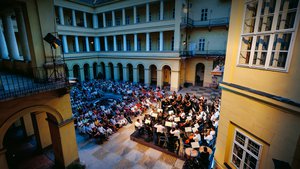
photo: László Mudra
A warm summer evening under a starry sky, listening to the classics: Concerto Budapest has been creating this idyllic atmosphere in the courtyard of the Pest County Hall for many years, and will delight the audience there this summer as well, this time with the music of Mozart and Beethoven.
How many ways are there to reveal a composer’s sense humour? This open-air concert – which is fresh in every sense of the word – by Concerto Budapest promises a light-hearted programme featuring a few examples of why ‘classical’ music isn’t necessarily ‘serious’ music. It’s brimming with some of the more frivolous aspects of the art, musical jokes that have become classics, and melodies that are so pleasant to hear out in the clear air.
The first three numbers of the concert were written by Mozart, one of the funniest and mischievous rascals in the history of music, whose boundless self-confidence often led him to ridicule his professional associates. The programme kicks off stylishly with an overture that opens the comedic tap. The opera Der Schauspieldirektor (‘The Impresario’) is about an opera company, with the opera singers played by actual opera singers all vying for the coveted leading role. This amazingly virtuosic, yet entertaining, musical introduction makes it clear from the very first note that it is a comic opera Mozart has in store for us.
The horn concerto is no less lacking in virtuosity, although to understand the humour, one has to look at the score. In it, Mozart left a number of teasing comments that could be interpreted as gibes taunting the horn-player friend for whom he originally intended it. The work, written for the natural horn, will here be played on the flugelhorn, a unique instrument resembling a trumpet.
In The Village Musicians, Mozart shows no mercy for either our straining diaphragm muscles or the fellow composers he, unable to regard them as competitors, was satirising as he entertains us with intentionally misplayed instruments, clumsy orchestration and ineptly devised closing notes. But the best thing is that, in Mozart’s hands, even this musical trolling sounds great.
Another cornerstone of Viennese classicism, Beethoven, is the last person we would think of when it comes to humour. Yet his Eighth Symphony is the most cheerful and relaxed work of his symphonic oeuvre. “You’ll like it someday,” the composer responded lightly when the work failed to achieve the desired effect at its premiere. And he was right: this lively and spirited side of Beethoven is now widely beloved.