The programme – Beethoven, Shostakovich, Liszt – may have been traditional, but the Concerto Budapest Symphony Orchestra excelled throughout
You could say the programme offered by this fine Hungarian symphony orchestra was hackneyed. Three warhorses galloped by in succession.
Review by Ivan Hewett on The Telegraph
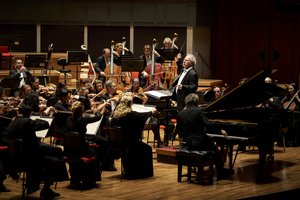
photo: Gábor Valuska
Concerto Budapest Symphony Orchestra, Symphony Hall Birmingham
Beethoven’s Third Piano Concerto and Fifth Symphony, and in between Liszt’sbest-known symphonic poem
Les Préludes. Only the mocking cheerfulness ofthe opening piece, Shostakovich’s Ninth Symphony, struck an unusual note.But the gamble paid off. The Concerto Budapest SO played these well-known pieces as if their lives depended on it, and brought out such a wide range of colours that they seemed startlingly unfamiliar.
The orchestra’s conductor, András Keller, doesn’t give a damn about framing a quirky programme. According to his programme note, he wants to “explore the enormous struggles we might face in our path to attaining redemption or fulfilment”. To do that he feels only lofty masterpieces will do.
It’s a tonic simply to encounter that faith in the art form. Shostakovich’ssymphony, which premiered a few months after the end of the Second World War, can sound like a jolly romp calculated to annoy the Soviet cultural commissars. Here the perkiness had a bitter edge. One could see the skull beneath the grin in those heartless piccolo chirrupings.
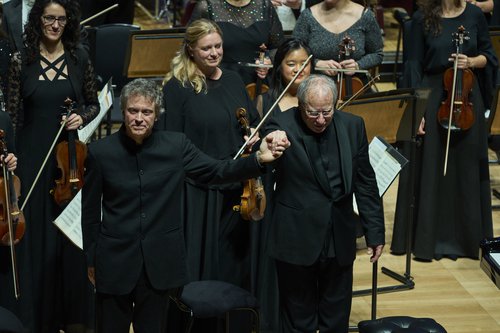
The slow movement, by contrast, had a perfect aloof coolness, almost beyond human feeling. Keller’s baton technique is certainly unorthodox, with atremblingly expressive left hand that reminded me of the now vanished Russian conductor Valery Gergiev. But it’s certainly effective. The pacing ofthe final mad dash to the finish line was impeccable.
That was the best performance, but the other performances were not far behind them. In Beethoven’s Third Piano Concerto the soloist was Paul Lewis– absolutely the right pianist to bring out the stern, chiselled grandeur in the music, though he also found a huge and yet tender spaciousness in the slow movement, and a range of far-away colours for those moments in the finale that seem to lift us up to the stars.
In Liszt’s Les Préludes one became aware of other qualities of this orchestra.They found a new, subtly layered, Wagnerian sound, exactly right for the way the music seems to beckon at distant hazy horizons, which then come intotriumphant focus. As for the finale, Beethoven’s Fifth, it had a thrillingurgency given extra bite by the orchestra’s fabulously pungent horn section. And let’s not forget the huge, yearning tone of the principal bassoonist whoreceived his own personal ovation at the end.